The stain is the least of it
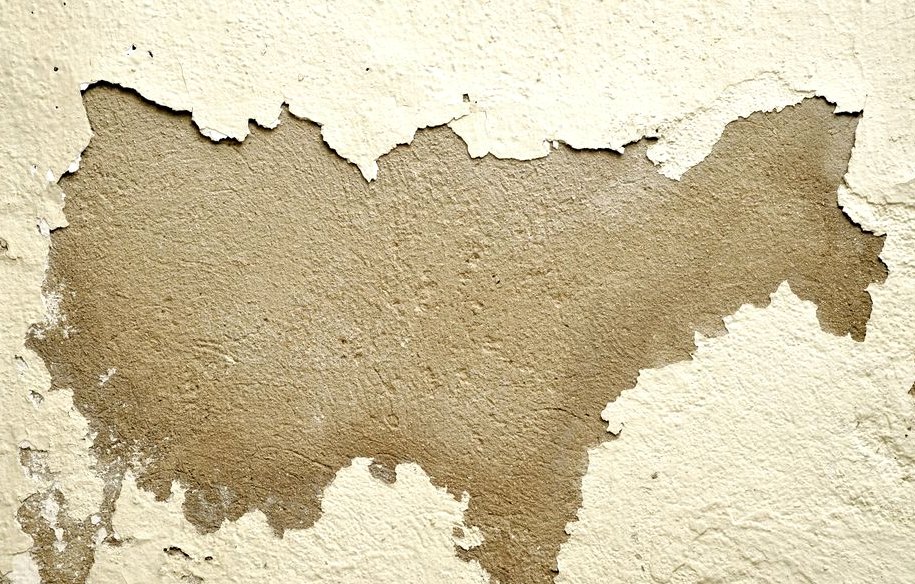
A stain on your ceiling or wall doesn't tell you the water's been dealt with — it tells you where to start looking. By the time discoloration shows up on the painted surface, water has already moved through the board to get there, so the affected area is usually bigger than the visible ring suggests.
We treat the stain as a marker, not the problem itself. A ring on a bedroom ceiling after a storm can mean the water traveled several feet from where it actually got in, so the repair area doesn't always match the stain's outline.
Board that's stained but still sound
Not every water-stained ceiling needs to come down. Sometimes the drywall dried out fine and it's structurally firm — no sag, no crumble, no soft give when you press on it. In that case the fix is sealing, not replacement. We prime that stained area with a stain-blocking primer, not regular ceiling paint, because plain paint alone won't hold back a stain that's still in the board.
This matters for your wallet and your schedule — sealing sound, stained board is a lot less work than tearing it out. But it only holds up if the board really is sound underneath, and that's a judgment call we make by hand, pressing and checking, not by guessing from the color of the stain.
When the board itself has to come out
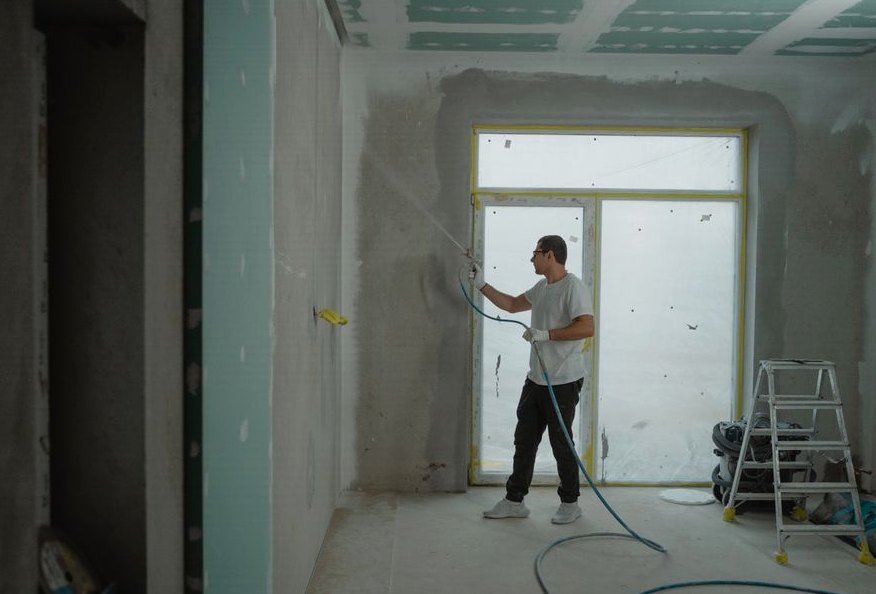
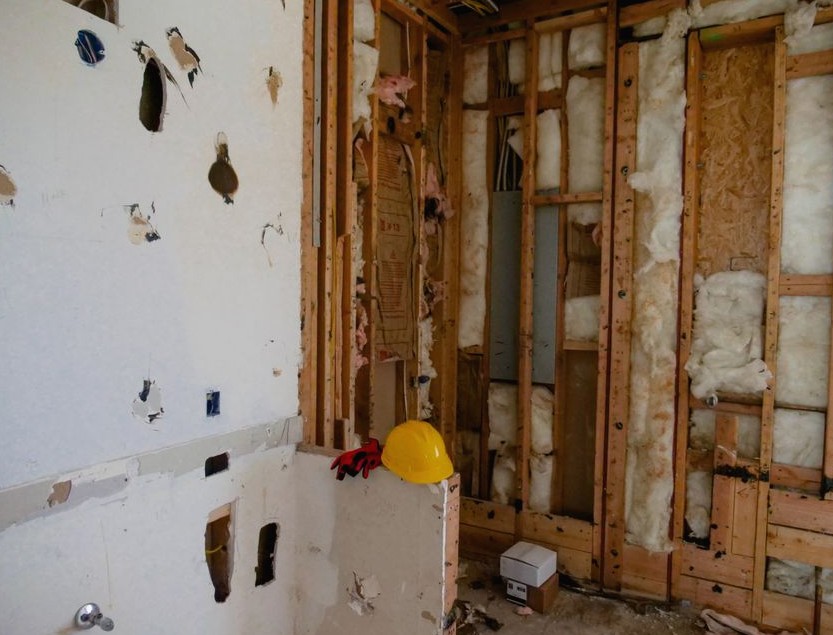
If the drywall has gone soft, sagged, or started to crumble at the edges, sealing it isn't an option — that section has to come out. We cut back to solid material, re-board, tape the new seams, and finish the surface to match what's around it. The goal is that nobody walks into the room afterward and can point to where the repair happened — the texture has to match, not just the color.
For spots prone to getting damp again — around a window that's leaked before, or a ceiling under a bathroom — we close those back up with moisture-resistant board instead of standard drywall. It's a small material change, but it means that spot is less likely to become a repeat job.
What it costs and what changes the number
What a job like this runs depends on how much board actually failed versus how much just needs sealing, and whether it's a wall or a textured ceiling that has to be matched. A stained but sound section that just needs primer and paint is a much smaller job than one that has to be cut out, re-boarded, and re-textured.
One cost we can give you directly: if the water damage is on a popcorn ceiling and that texture has to come down to get to sound drywall, popcorn removal runs $1 to $3 per square foot on its own. That's on top of whatever re-boarding and finishing the water damage itself requires, since removal and repair are separate steps when both are needed.
Around here, spring and summer storms drive most of these calls — roof and window leaks that soak a ceiling or wall before anyone notices. Worth knowing, because a leak that got patched at the roof level didn't fix the drywall underneath — it just stopped adding to a problem that's still there.
What Makes Kearney Different
Local factors we account for around Kearney:
Climate
- Low winter humidity speeds compound drying, so cold-season interior repairs cure fast once the home is heated.
Soil & Ground
- Seasonal ground moisture swings in the valley contribute to the settling cracks that show up at door and window corners.
Local Notes
- Kearney is the seat of Buffalo County and the trade center for central Nebraska along the I-80 corridor.
Photos From the Field
A visual look at what the service involves.
How It Works
-
Call or Text
Tell us what you're seeing and when it started — you'll get a straight answer, not a sales pitch.
-
On-Site Inspection
We come out, measure what's actually happening, and walk you through what we find.
-
Clear, Written Quote
We put the fix, the timeline, and the number on paper — take your time with it.
What this typically involves:
- Seal any firm surface-stained board with stain-blocking primer, not just paint
- Confirm the leak source is fixed and the framing has dried before any repair
What to Expect to Pay
Ranges to budget around - every situation is priced on its own specifics.
$500–$1500
Common Questions
- What is the difference between hot mud and regular joint compound?
- Setting-type 'hot mud' cures by chemical reaction on a set clock (20, 45, or 90 minutes), so coats can stack the same day and it shrinks less — good for deep fills and fast turnarounds. All-purpose ready-mix is easier to sand to a glass-smooth finish and is our choice for the final skim coat.
- Do small nail pops and screw pops mean a bigger problem?
- Usually not — they're fasteners backing out as framing dries, and the fix is to re-secure the area with a screw nearby, remove or set the popped fastener, and re-finish. If a whole run of pops appears at once it can point to framing movement worth checking, but individual pops are routine.
- Can you repair water-damaged drywall or does it all need replacing?
- Any board that's soft, swollen, stained through, or growing mold gets removed — you can't finish over failed gypsum. Firm board with only a surface stain can be sealed and repainted. We check with a moisture meter so we're replacing what's actually compromised, not more than necessary.
- How do you keep the rest of my house clean during the work?
- We zip-wall or plastic off the work area, cover floors and furniture, run a dustless sander on a HEPA vac, and clean up at the end of each day. The goal is that the only sign we were there is the finished repair.
- How do you fix a hole in drywall so the patch doesn't show?
- The patch disappears in the finishing, not the patching. We square up the hole, back it so the new piece is supported, tape the seams, then build the joint in three feathered coats, sand flat, and match the wall texture before priming. Done right, a light raked across the wall shows no ridge.
- What's the difference between a patch and replacing the whole sheet?
- For a hole up to roughly a foot, a backed patch is faster and just as strong. Once damage runs across a seam, spans studs, or the sheet is soft from water, replacing the full sheet gives a flatter, longer-lasting result than chaining patches together.
- Can you match my existing wall or ceiling texture?
- Yes — orange-peel, knock-down, and smooth are the common ones and we match all three with a hopper gun and the right compound consistency. Hand textures and older skip-trowel patterns we match by hand. We test on a scrap first so the repair blends instead of standing out.
- How long does a typical drywall repair take?
- A small patch is often one visit for the work plus a short return once compound has fully dried, because each coat needs to dry before the next. Setting-type 'hot mud' lets us do multiple coats in a day when the schedule is tight; standard all-purpose mud usually means a two-day turnaround.
A Few More Questions
- How much does drywall repair cost?
- A small hole or crack patch typically runs $100–$300, a medium patch with texture match $250–$600, and a full sheet replaced and finished $300–$800. Water-damage repair is priced by the room once the extent is known. Access, texture matching, and paint all move the number, so a quick look gives an accurate quote.
- Will you paint the repair too, or just do the drywall?
- We finish the drywall, texture it, and prime so it's ready for paint that matches the wall. Many customers add the finish coat; we can prime-and-paint the repair or hand it off primed for your painter — just tell us which.
- Can drywall be repaired around plumbing or electrical work?
- Yes — that's a common job after a plumber or electrician opens a wall. We patch the opening, tape, finish, and texture-match so there's no sign the wall was ever cut. If the trades aren't finished, we come after their inspection so nothing gets closed up early.
Other Services We Offer
Communities We Cover
Based in Kearney, NE. Call (308) 206-7235 to confirm coverage for your address.
Why Kearney Homeowners Call
- Free EstimatesThe visit and the written scope cost you nothing.
- No-pressure estimatesThe estimate is information, not an obligation.
- We clean up before we leaveThe site's left the way you'd want it, not a mess to deal with.
- One crew from start to finishNo rotating faces — the same crew, all the way through.
Ready when you are: (308) 206-7235.