Getting the board up and the seams disappearing
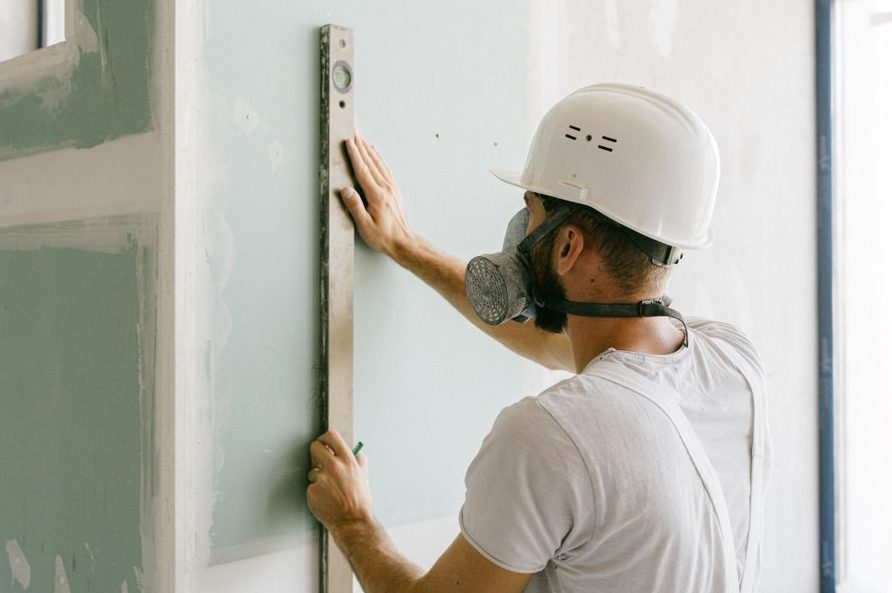
Once the sheets are hung, the real work of installation starts — taping, coating, and finishing every seam and fastener so the whole surface reads as one continuous plane. That means multiple coats over each joint and screw dimple, feathered out wide enough that you can't find the edge of the repair with your hand or your eye once it's primed. Rushing this step is the single biggest reason a wall looks fine for a week and then shows every seam under the first coat of paint.
We finish to a level that matches what the rest of the room needs — a hallway doesn't get the same scrutiny as a wall under raking light from a big window, and we plan the coating passes accordingly. Once the taping and coating are done and sanded, we texture to match whatever's already on the adjoining walls and prime the whole area so it's ready for your painter or your own roller.
Cutting around outlets, switches, and vents
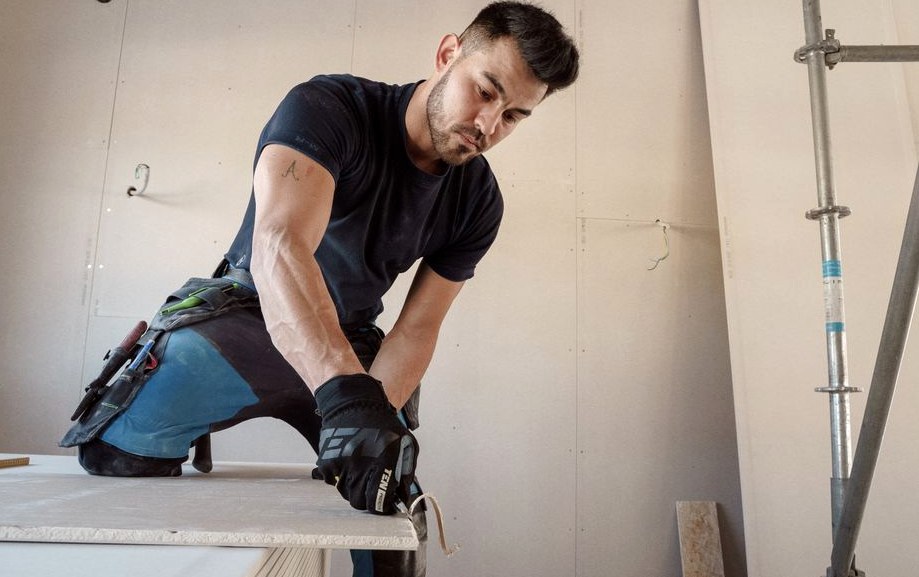
New drywall has to come back with clean, exact holes for every outlet, switch box, recessed light, and vent that was already in that wall. We use a drywall router and a rotary cut-out tool for that — they let us cut precisely around a box or fixture without the ragged, oversized holes you get from eyeballing it with a utility knife. Sloppy cutouts mean cover plates that don't sit flat and gaps you can see daylight through.
For the straight runs — corners, door and window returns, the long edges where two sheets meet — we rely on a T-square and a rasp to keep cuts square and edges clean, which is what makes the factory edge of the board line up properly with the field. That combination of tools is what separates a wall that looks hung by hand from one that looks like it came that way.
Making new work disappear into the old
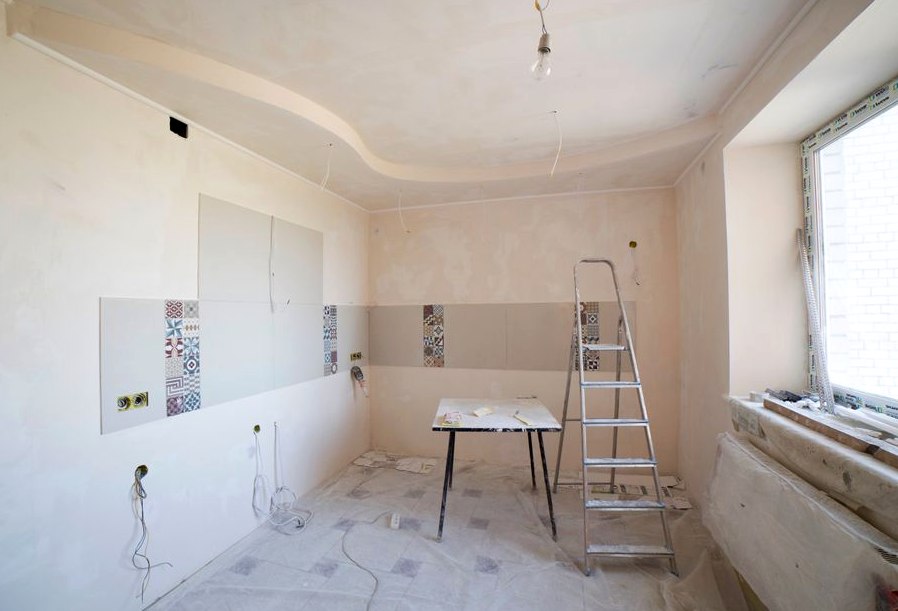
The trickiest part of installation isn't usually the new section — it's making it vanish into the wall around it. Texture has to match the adjoining rooms, not just in pattern but in how heavy or light it was sprayed on, and that's a judgment call you make on site, not off a chart. We texture to match what's already there before we prime, because texture applied after paint never blends the same way.
Kearney's big seasonal humidity swings move framing and gypsum enough that nail pops and small seasonal cracks show up in walls all over town — it's part of why we plan the finish work to hold up to that movement rather than treating the wall as if it'll never shift.
What drives the price on a job like this
For work sized like a medium patch — taping, coating, and texture-matching a section of wall rather than a full room — pricing typically runs $250 to $600. Where you land in that range depends on how much cutting is involved around fixtures and boxes, how many coats the seams need to disappear cleanly, and how closely the existing texture has to be matched to blend in.
A wall with a couple of outlets and a straightforward factory-edge seam finishes faster and cheaper than one with vents, multiple boxes, and a heavier or more unusual texture pattern to replicate. Full room hangs and additions involve more board, more seams, and a different scope of labor, so we walk the job and give you a firm number before we start rather than quoting off a patch range.
What Makes Kearney Different
Local factors we account for around Kearney:
Climate
- Humid continental climate on the Nebraska plains: cold, dry winters and warm, humid summers.
Soil & Ground
- Platte River valley loess and silty soils under most of the area — expansive enough to shift footings and telegraph movement into drywall.
Local Notes
- Older housing near downtown carries plaster and aging drywall that cracks and needs patching; newer subdivisions bring new-build and remodel work.
Photos From the Field
A visual look at what the service involves.
How It Works
-
Call or Text
Tell us what you're seeing and when it started — you'll get a straight answer, not a sales pitch.
-
On-Site Inspection
We come out, measure what's actually happening, and walk you through what we find.
-
Clear, Written Quote
We put the fix, the timeline, and the number on paper — take your time with it.
What this typically involves:
- Texture to match adjoining rooms and prime for paint
- Hang board perpendicular to framing with staggered seams to reduce cracking
What to Expect to Pay
Ranges to budget around - every situation is priced on its own specifics.
$100–$300
Common Questions
- Do you remove popcorn ceilings?
- Yes. We test the age of the ceiling first, mask and protect the room, scrape the texture, then skim and finish the ceiling smooth or re-texture to your preference. Pre-1980s ceilings can contain asbestos and must be tested before any scraping — we won't disturb one that hasn't been cleared.
- How much does drywall repair cost?
- A small hole or crack patch typically runs $100–$300, a medium patch with texture match $250–$600, and a full sheet replaced and finished $300–$800. Water-damage repair is priced by the room once the extent is known. Access, texture matching, and paint all move the number, so a quick look gives an accurate quote.
- Will you paint the repair too, or just do the drywall?
- We finish the drywall, texture it, and prime so it's ready for paint that matches the wall. Many customers add the finish coat; we can prime-and-paint the repair or hand it off primed for your painter — just tell us which.
- Can drywall be repaired around plumbing or electrical work?
- Yes — that's a common job after a plumber or electrician opens a wall. We patch the opening, tape, finish, and texture-match so there's no sign the wall was ever cut. If the trades aren't finished, we come after their inspection so nothing gets closed up early.
- What is the difference between hot mud and regular joint compound?
- Setting-type 'hot mud' cures by chemical reaction on a set clock (20, 45, or 90 minutes), so coats can stack the same day and it shrinks less — good for deep fills and fast turnarounds. All-purpose ready-mix is easier to sand to a glass-smooth finish and is our choice for the final skim coat.
- Do small nail pops and screw pops mean a bigger problem?
- Usually not — they're fasteners backing out as framing dries, and the fix is to re-secure the area with a screw nearby, remove or set the popped fastener, and re-finish. If a whole run of pops appears at once it can point to framing movement worth checking, but individual pops are routine.
- Can you repair water-damaged drywall or does it all need replacing?
- Any board that's soft, swollen, stained through, or growing mold gets removed — you can't finish over failed gypsum. Firm board with only a surface stain can be sealed and repainted. We check with a moisture meter so we're replacing what's actually compromised, not more than necessary.
- How do you keep the rest of my house clean during the work?
- We zip-wall or plastic off the work area, cover floors and furniture, run a dustless sander on a HEPA vac, and clean up at the end of each day. The goal is that the only sign we were there is the finished repair.
A Few More Questions
- Is the dust as bad as people say?
- It doesn't have to be. We sand with a dustless sander tied to a HEPA vacuum and mask off the work area, so the fine drywall dust that normally coats a whole house stays contained to the repair.
- My ceiling has a brown water stain — do I need drywall repair or just paint?
- First find and fix the leak, then check the drywall. A light stain on a firm, dry ceiling is a primer-and-paint job. If the board is soft, sagging, or the paper is delaminating, that section has to come out and be replaced — painting over compromised board just hides a problem that will come back.
- What causes drywall cracks to keep coming back?
- Recurring cracks are usually movement, not bad mud — seasonal framing expansion, truss uplift at ceiling-wall joints, or settling. We repair the crack and, where it's a movement joint, use techniques that flex instead of re-cracking, but persistent structural movement is worth having looked at.
Other Services We Offer
Communities We Cover
Based in Kearney, NE. Call (308) 206-7235 to confirm coverage for your address.
Why Kearney Homeowners Call
- Free EstimatesThe visit and the written scope cost you nothing.
- Scheduling that respects your timeWe plan around your day, not a four-hour guess.
- Written quote before any workThe scope goes on paper first — work starts after you've read it.
- Straight answers, no sales pitchQuestions get answers, not a close.
Ready when you are: (308) 206-7235.