Drywall Repair Costs
Small drywall hole or crack patches typically cost $100-$300. Medium patches that require taping and texture matching typically cost $250-$600. The applicable range depends on whether the job is a small patch or a medium repair requiring tape and texture work.
How We Finish a Patch
We use setting-type joint compound, also called hot mud, and all-purpose ready-mix joint compound. We sand between and after coats until the repair has a flat, feathered edge without ridges or tool marks. That preparation keeps a raised patch line from showing through the finished surface.
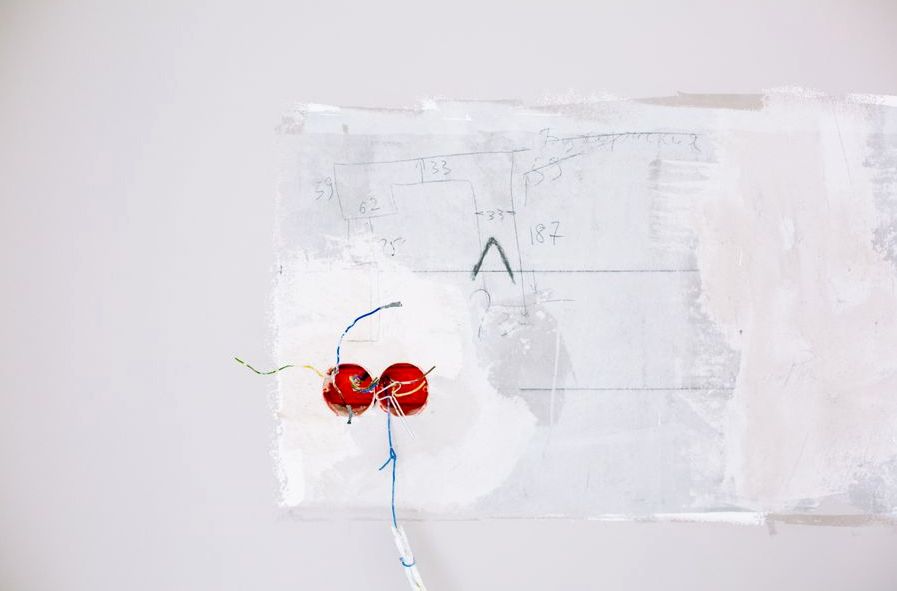
Matching the Existing Texture
A flat patch is not finished if it does not match the surrounding wall. Before priming, we match the existing orange-peel, knock-down, or smooth texture. We then prime the patch so it does not flash under paint and hand it off ready for the finish coat.
Cracks at Doors and Windows
Kearney has a humid continental climate with cold, dry winters and warm, humid summers. Seasonal ground moisture swings in the valley contribute to settling cracks at door and window corners. When requesting a repair, point out every crack in those areas so the full patching scope can be identified rather than treating one visible spot.
Drywall Repair in Kearney
Kearney is the Buffalo County seat and a central Nebraska trade center along the I-80 corridor. For local drywall repairs, we provide a clear scope based on the patch size, whether tape is needed, and which existing texture must be matched. Contact us to discuss the damaged area and the applicable repair range.
What Makes Kearney Different
Local factors we account for around Kearney:
Climate
- Humid continental climate on the Nebraska plains: cold, dry winters and warm, humid summers.
- Spring and summer storms drive the water-intrusion calls — roof and window leaks that soak ceilings and walls.
- Low winter humidity speeds compound drying, so cold-season interior repairs cure fast once the home is heated.
- Big seasonal humidity swings move framing and gypsum, which is why nail pops and seasonal cracks are common here.
Soil & Ground
- Platte River valley loess and silty soils under most of the area — expansive enough to shift footings and telegraph movement into drywall.
- Seasonal ground moisture swings in the valley contribute to the settling cracks that show up at door and window corners.
Local Notes
- Kearney is the seat of Buffalo County and the trade center for central Nebraska along the I-80 corridor.
- A University of Nebraska at Kearney campus and steady rental housing stock mean recurring turn-and-repair drywall work.
- Older housing near downtown carries plaster and aging drywall that cracks and needs patching; newer subdivisions bring new-build and remodel work.
- Storm season along the Platte drives water-damage ceiling and wall repairs across the county each year.
How It Works
-
Call or Text
Tell us what you're seeing and when it started — you'll get a straight answer, not a sales pitch.
-
On-Site Inspection
We come out, measure what's actually happening, and walk you through what we find.
-
Clear, Written Quote
We put the fix, the timeline, and the number on paper — take your time with it.
What this typically involves:
- Set corner bead and feather it wide so the repair disappears into the plane of the wall
- Sand between and after coats to a flat, feathered edge with no ridges or tool marks
What to Expect to Pay
Ranges to budget around - every situation is priced on its own specifics.
$300–$800
Common Questions
- What is the difference between hot mud and regular joint compound?
- Setting-type 'hot mud' cures by chemical reaction on a set clock (20, 45, or 90 minutes), so coats can stack the same day and it shrinks less — good for deep fills and fast turnarounds. All-purpose ready-mix is easier to sand to a glass-smooth finish and is our choice for the final skim coat.
- Do small nail pops and screw pops mean a bigger problem?
- Usually not — they're fasteners backing out as framing dries, and the fix is to re-secure the area with a screw nearby, remove or set the popped fastener, and re-finish. If a whole run of pops appears at once it can point to framing movement worth checking, but individual pops are routine.
- Can you repair water-damaged drywall or does it all need replacing?
- Any board that's soft, swollen, stained through, or growing mold gets removed — you can't finish over failed gypsum. Firm board with only a surface stain can be sealed and repainted. We check with a moisture meter so we're replacing what's actually compromised, not more than necessary.
- How do you keep the rest of my house clean during the work?
- We zip-wall or plastic off the work area, cover floors and furniture, run a dustless sander on a HEPA vac, and clean up at the end of each day. The goal is that the only sign we were there is the finished repair.
- How do you fix a hole in drywall so the patch doesn't show?
- The patch disappears in the finishing, not the patching. We square up the hole, back it so the new piece is supported, tape the seams, then build the joint in three feathered coats, sand flat, and match the wall texture before priming. Done right, a light raked across the wall shows no ridge.
- What's the difference between a patch and replacing the whole sheet?
- For a hole up to roughly a foot, a backed patch is faster and just as strong. Once damage runs across a seam, spans studs, or the sheet is soft from water, replacing the full sheet gives a flatter, longer-lasting result than chaining patches together.
- Can you match my existing wall or ceiling texture?
- Yes — orange-peel, knock-down, and smooth are the common ones and we match all three with a hopper gun and the right compound consistency. Hand textures and older skip-trowel patterns we match by hand. We test on a scrap first so the repair blends instead of standing out.
- How long does a typical drywall repair take?
- A small patch is often one visit for the work plus a short return once compound has fully dried, because each coat needs to dry before the next. Setting-type 'hot mud' lets us do multiple coats in a day when the schedule is tight; standard all-purpose mud usually means a two-day turnaround.
A Few More Questions
- Can drywall be repaired around plumbing or electrical work?
- Yes — that's a common job after a plumber or electrician opens a wall. We patch the opening, tape, finish, and texture-match so there's no sign the wall was ever cut. If the trades aren't finished, we come after their inspection so nothing gets closed up early.
Other Services We Offer
Communities We Cover
Based in Kearney, NE. Call (308) 206-7235 to confirm coverage for your address.
Why Kearney Homeowners Call
- Free EstimatesThe visit and the written scope cost you nothing.
- The quote is the priceThe quote is the invoice. Surprises are for birthdays.
- Measured, not guessedWe quote what we measured, not what we assume.
- We walk you through the finished workBefore we leave, you see what was done and why.
Ready when you are: (308) 206-7235.
Updated August 2026